
The Arena and The Conference Room
What horses can teach us about corporate culture.
5/21/20262 min read

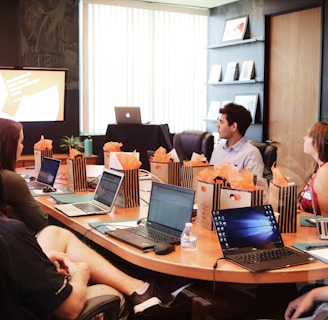
At first glance, the arena and the conference room seem worlds apart.
One is quiet, open, and grounded in the rhythms of nature. The other is fast paced, structured, and often filled with competing priorities, deadlines, and expectations. But the more time I spend working with both horses and people, the more I see the similarities between them.
Both environments are built on relationship, communication, and trust.
In corporate settings, culture is often talked about in terms of mission statements, values, or leadership strategies. But culture is not created by what is written on the wall. Culture is created by how people actually experience working together every day.
Horses make this impossible to ignore.
In equine assisted coaching, horses don’t respond to what we say. They respond to how we show up. Our level of presence, clarity, and internal state all matter. If we are distracted, incongruent, or trying to control the outcome, the horse notices immediately. If we are grounded and clear, connection happens naturally.
That is where the arena becomes such a powerful teacher.
In a conference room, people can mask tension, disconnect, or uncertainty for quite a while. In the arena, those dynamics become visible almost immediately. If communication is unclear, the horse hesitates. If someone is trying to force an outcome instead of building connection, the horse resists. If leadership lacks steadiness or trust, the relationship reflects it in real time.
Not as judgment, but as information.
What often emerges in equine assisted coaching is a deeper understanding of how teams function beneath the surface. Who takes up space and who pulls back. Who leads with clarity and who leads with control. Where trust exists and where it breaks down. Horses reveal patterns that already exist within the culture but may have gone unnoticed in everyday workplace interactions.
This is especially relevant in today’s work environments, where many organizations are struggling with burnout, disconnection, and communication challenges.
People do not thrive in environments where they constantly feel guarded, unheard, or overwhelmed. The nervous system plays a role in every interaction, every meeting, and every leadership decision. When individuals and teams operate in a chronic state of stress, communication narrows, creativity decreases, and collaboration becomes more difficult.
Horses offer immediate feedback about these dynamics because they are highly attuned to nervous system states and relational safety.
They teach us that effective leadership is not about control. It is about creating enough clarity and steadiness for others to feel safe enough to engage, contribute, and move forward together.
In the arena, that lesson becomes experiential instead of theoretical.
Teams begin to notice how their communication affects connection. Leaders recognize the difference between authority and presence. Individuals become more aware of the impact their internal state has on the people around them.
And perhaps most importantly, people begin to understand that healthy culture is not something that can be demanded. It is something that is created moment by moment through trust, consistency, and authentic relationship.
The arena and the conference room may look very different on the surface.
But both reveal the same truth.
Connection matters. Presence matters. And culture is always being shaped by how we show up with one another.