
A Real Life Success Story
How I used neuroscience to help my little one.
11/15/20252 min read
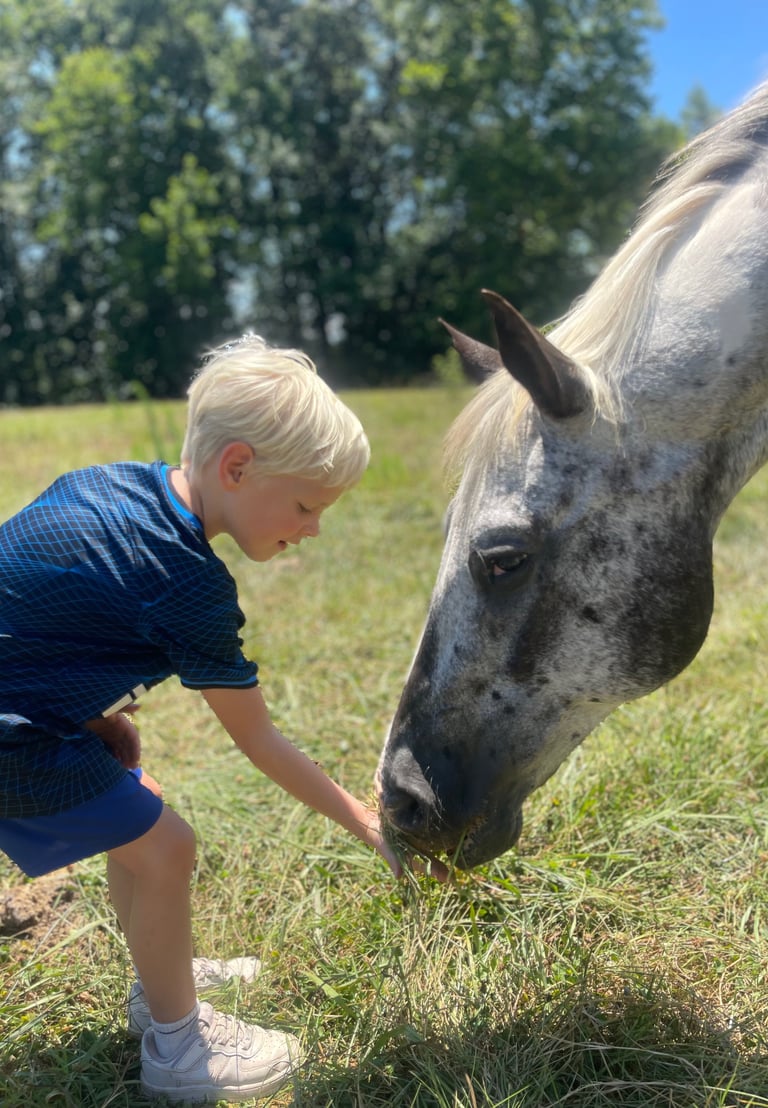
This is my littlest little, and he loves his mama. Multiple households can be hard, and some mornings he just does not want to leave me or go to school. We have had all the conversations about responsibility, choices, have-to’s versus want-to’s, consequences, rewards… and today none of it was working.
He was stuck in “I can’t do it.” His breathing was rapid and shallow. He was fully in a sympathetic state, caught in survival mode.
We had already missed carpool, so we sat in my car in the school parking lot. I climbed into the back seat and started with a quick grounding exercise and some deep breathing. Then I talked about the nervous system and the difference between sympathetic activation and the parasympathetic state where we can think clearly and access solutions.
I showed him the hand model of the brain: the prefrontal cortex, our thinking and reasoning center, and the limbic system, the part that wants to keep us safe but can get stuck in fear. I showed him how we “flip our lid,” and how the thinking brain goes offline when the limbic system takes over. I asked him which he preferred, feeling scared or feeling confident. The choice was obvious.
Then we talked about neuroplasticity in kid-friendly language. I explained that neurons create pathways in the brain just like paths in the woods. When we say “I can’t” over and over, that path becomes the one we automatically take. But when we slow down, breathe, get regulated, and change the message to “I can, and here’s why,” we begin creating a new pathway. The more we walk that path, the stronger and clearer it becomes.
He listened quietly. I wasn’t sure if any of it was landing or if he thought I had officially lost it. But then he said, “I want to walk in now.”
We went into the office together. More hugs, a few tears, and the counselor came to greet him. She offered to spend a few minutes with him before class, and he agreed. After a final “love you,” he headed off.
When I got home, this email was waiting for me:
“Quinn showed me the brain-hand model you talked about. We tried some deep breathing and he said it felt like his lid was closing back down and he was feeling more in control. He was ready to head to class and transitioned well. I told Quinn I’m proud of him for using strategies to take care of his feelings. I offered to check in later, but he declined. He will tell his teacher if he needs more help today.”
This stuff really works. Awareness, regulation, choice, and intentional neuroplasticity are powerful tools for all of us — kids and adults alike.